Adobe Community Boxes
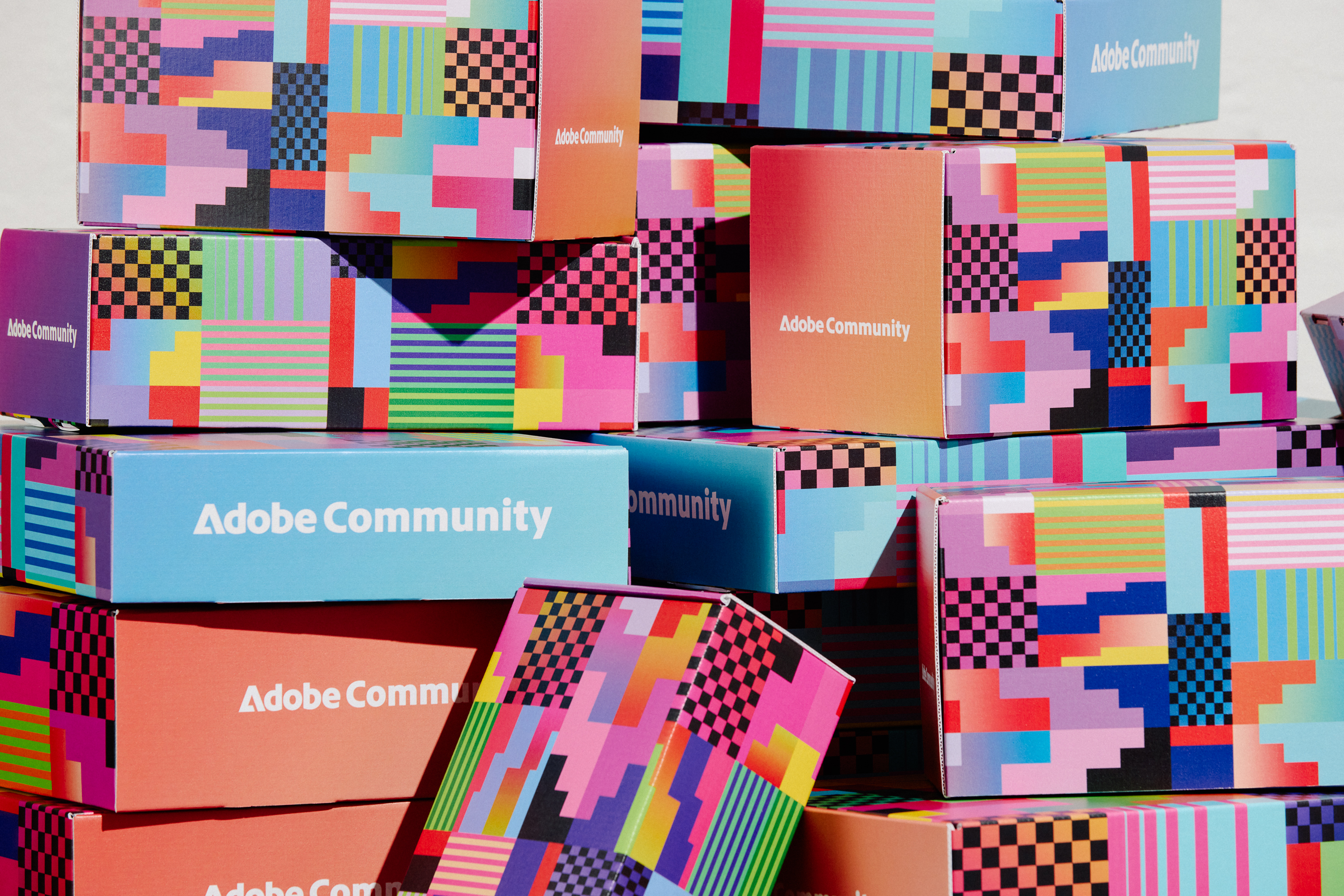
Created for a campaign between Adobe Express and James Barnard's creative community, the Adobe Community Boxes transformed a promotional package into an experience designed to be opened, explored and shared.
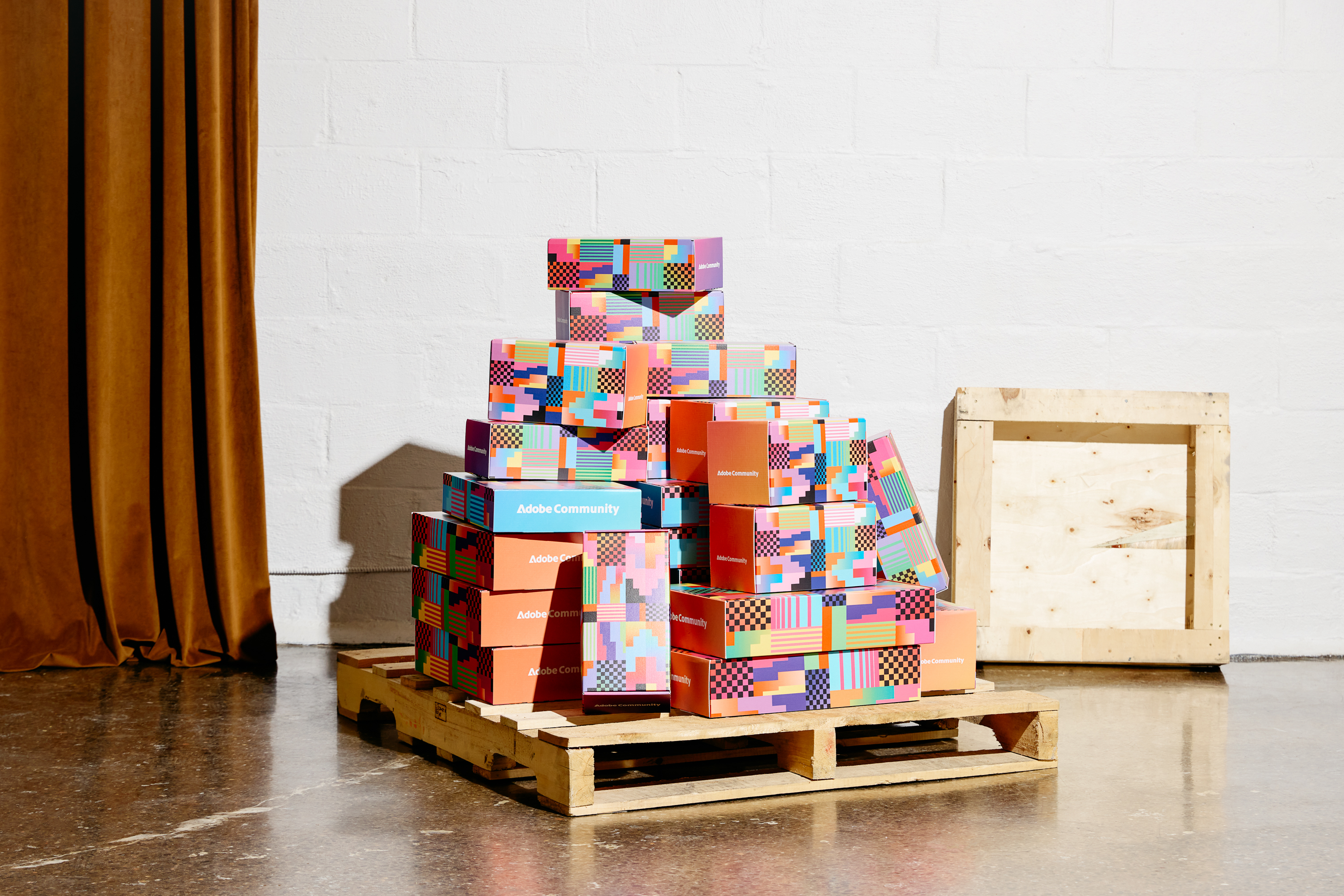
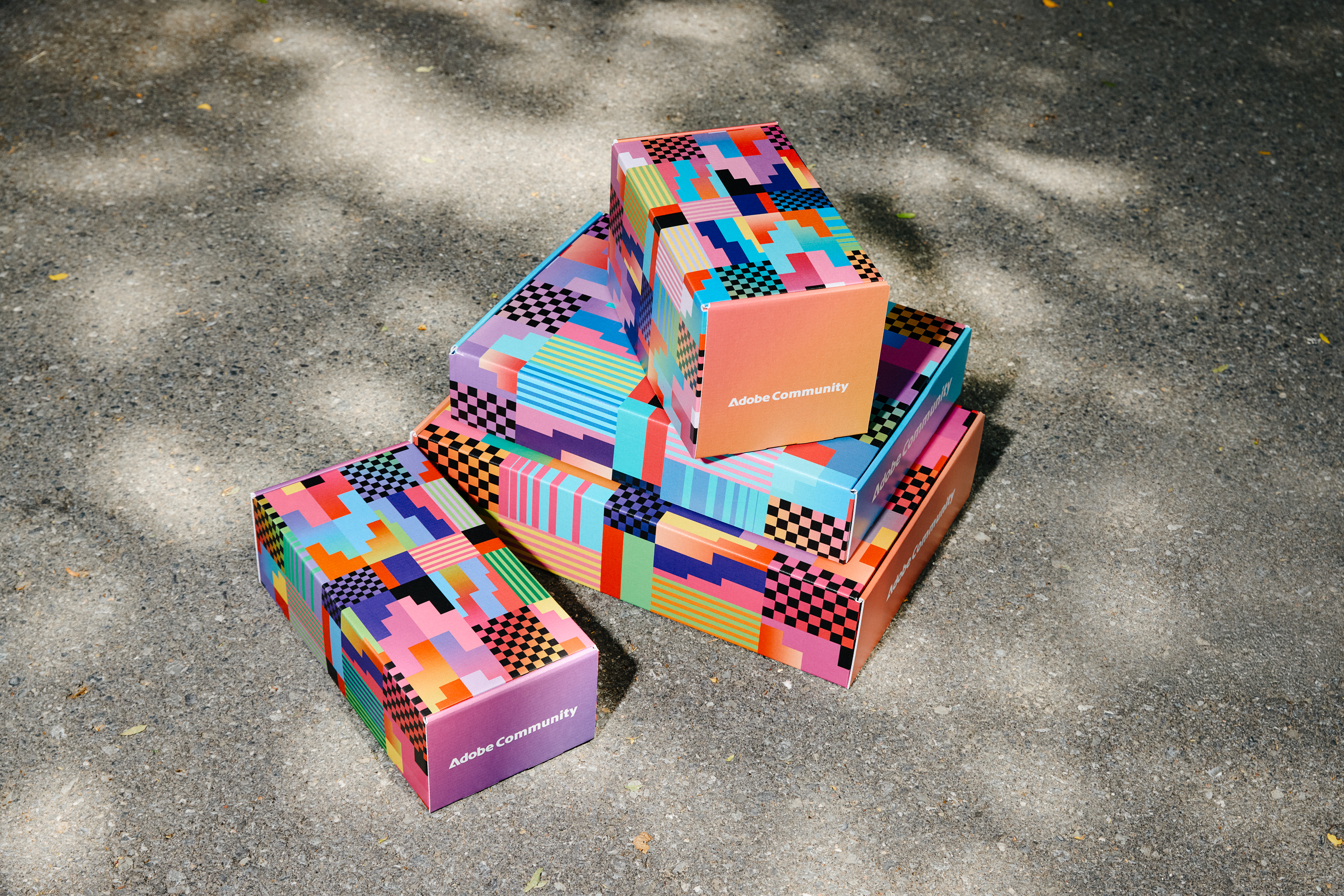
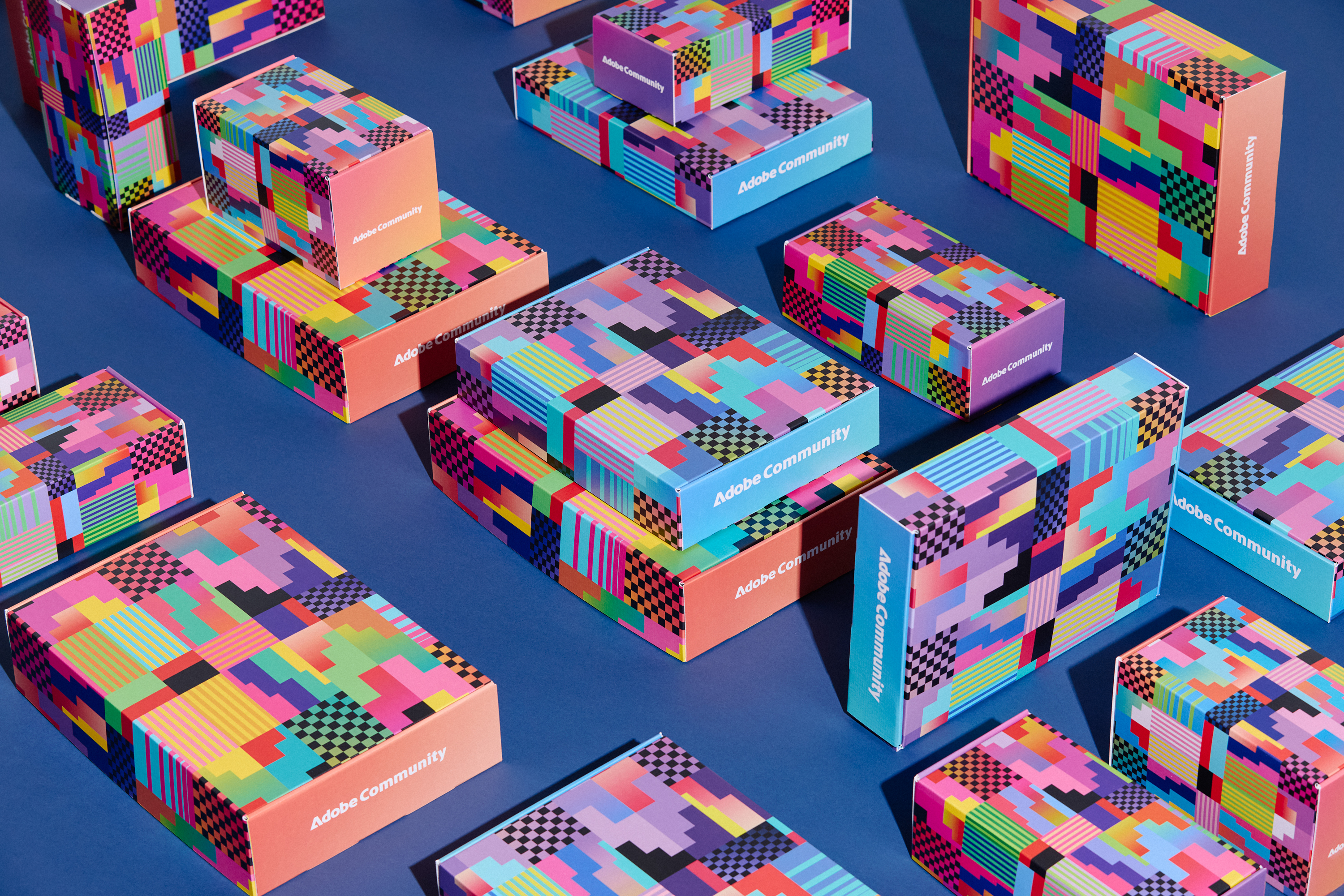
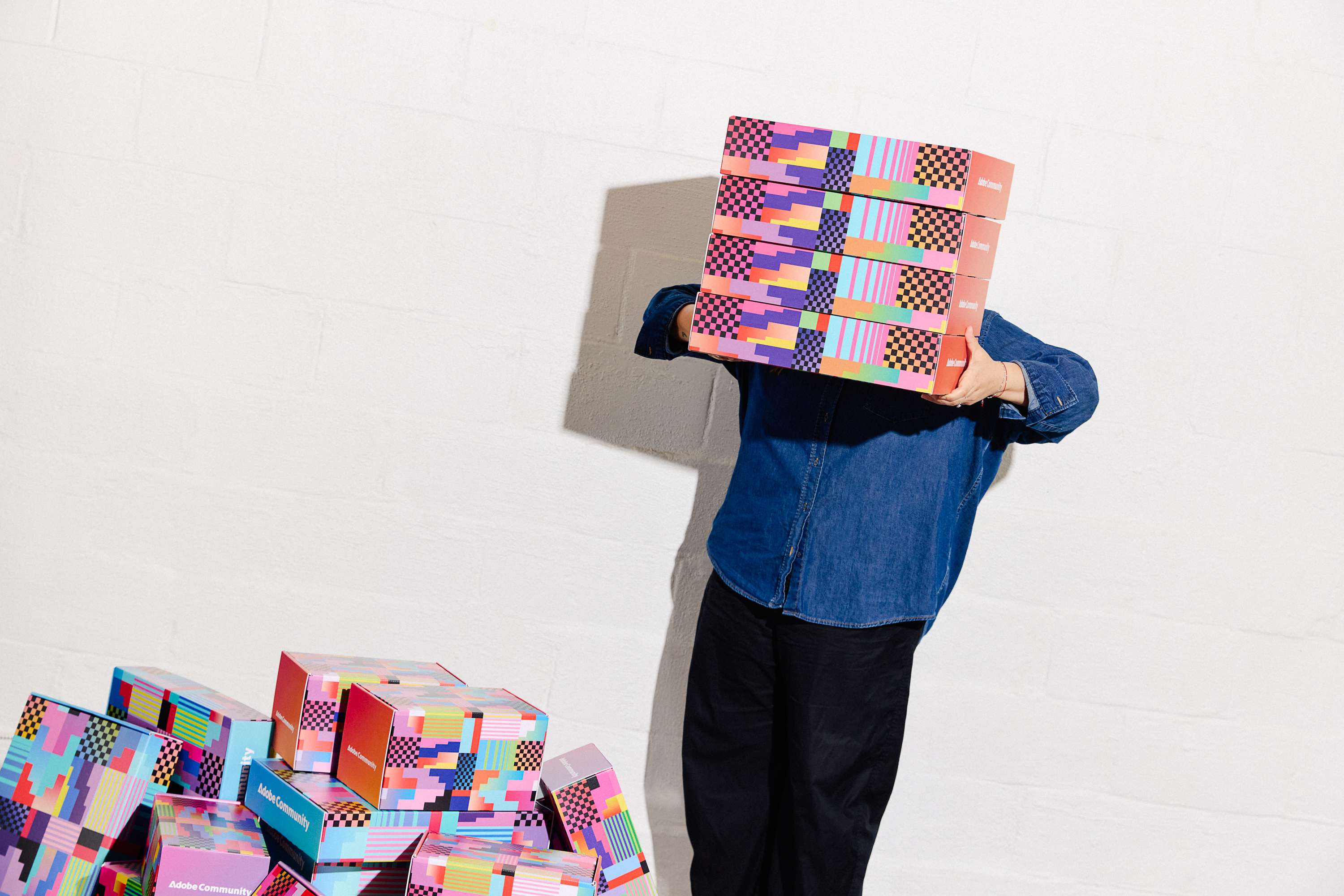
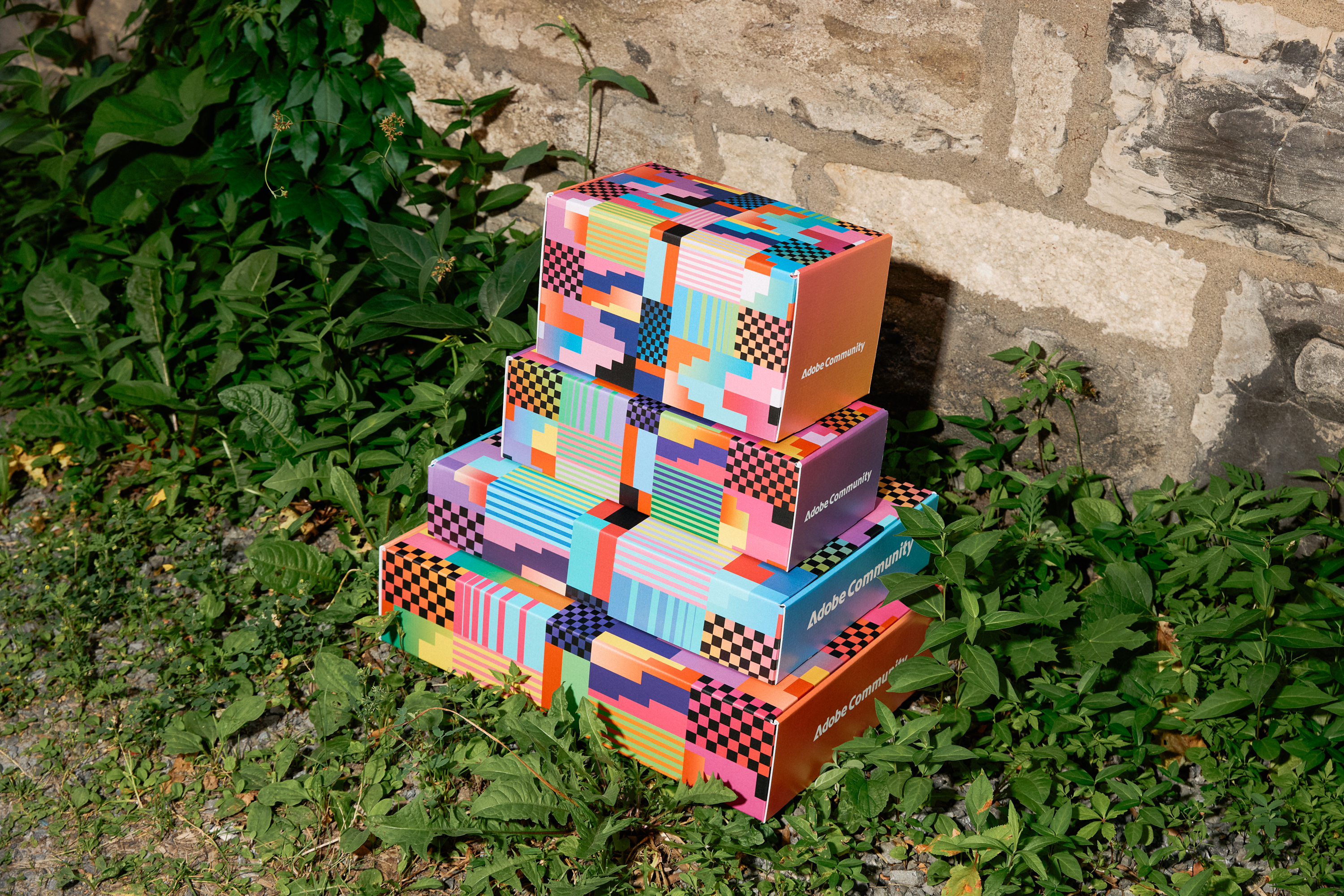
Developed on a three-day turnaround, the system needed to work across four differently sized boxes while feeling cohesive as a collection. With just one day dedicated to the initial design, a modular visual language allowed the concept to adapt quickly across formats without losing its identity.
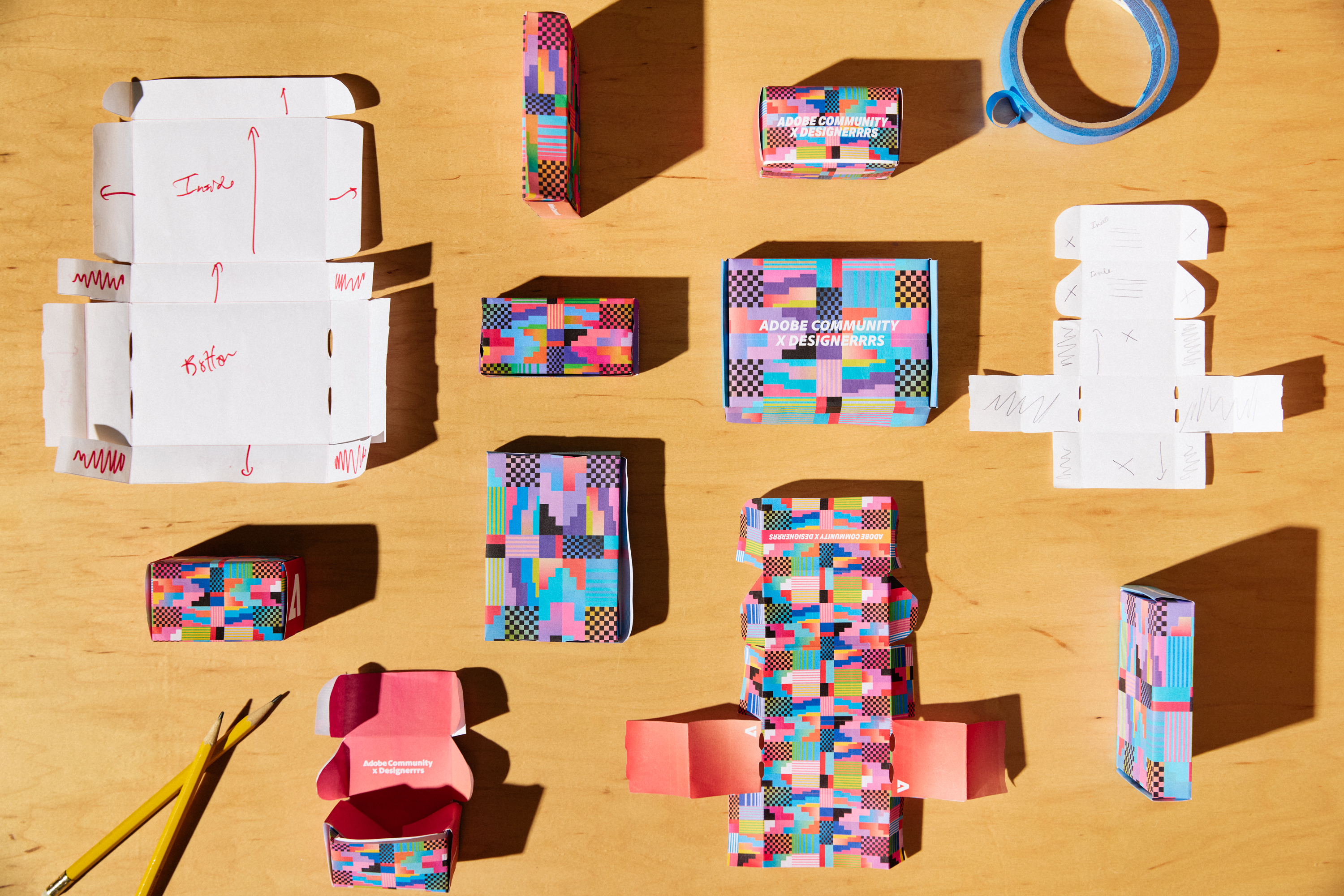
A Modular System
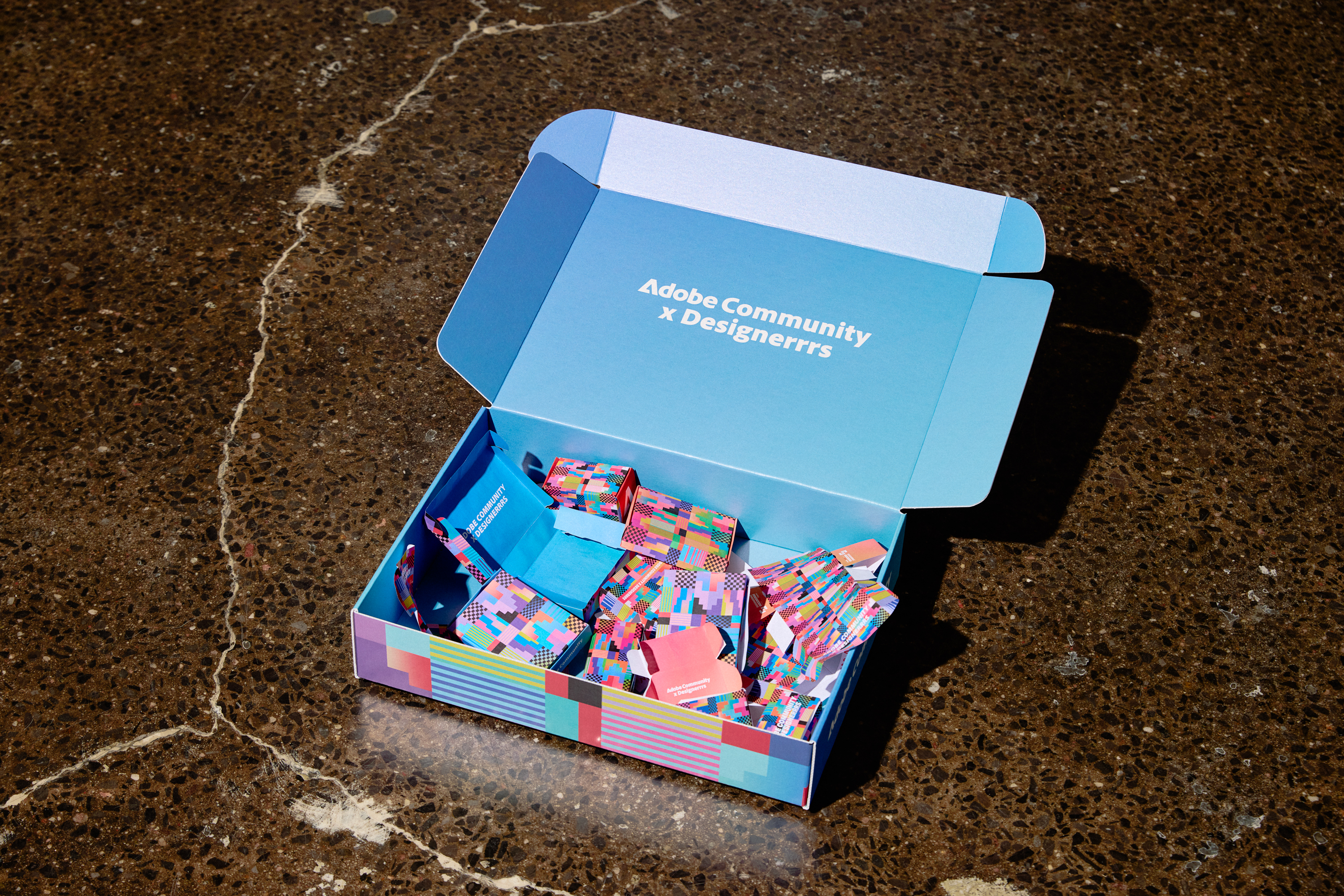
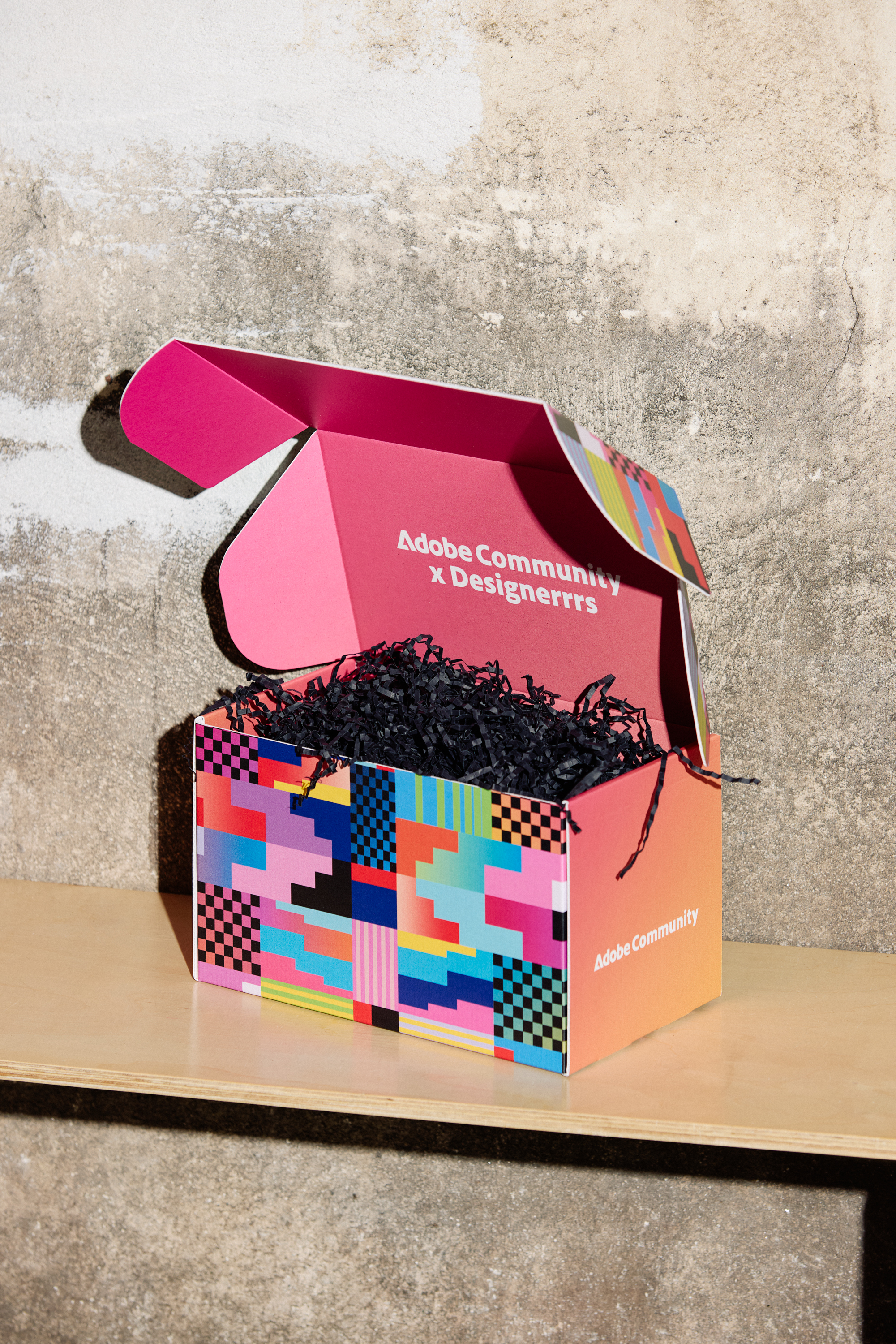
A geometric motif became the foundation of the packaging system, creating an abstract visual language that could shift in scale and composition across each box. The campaign slogan was integrated into the exterior, while Adobe-inspired gradients introduced colour inside and created a distinct contrast between the closed package and its reveal.
Rather than repeating one treatment across every format, colour combinations shifted between boxes, giving each its own character while keeping the collection connected.
Designing the Unboxing
Each box was built around the product it contained, including an Adobe-branded mini radio, a Lululemon backpack, a water bottle, or a blanket. The opening of each package was treated as part of the experience, extending the design beyond the printed surface.
Each package featured a different colour of crinkle paper inspired by CMYK, creating another connection to the world of design while making each box feel distinct. As recipients opened the package, the exterior graphics gave way to a gradient interior, a burst of colour and finally the product inside, turning the reveal into part of the design.
From Package to Content
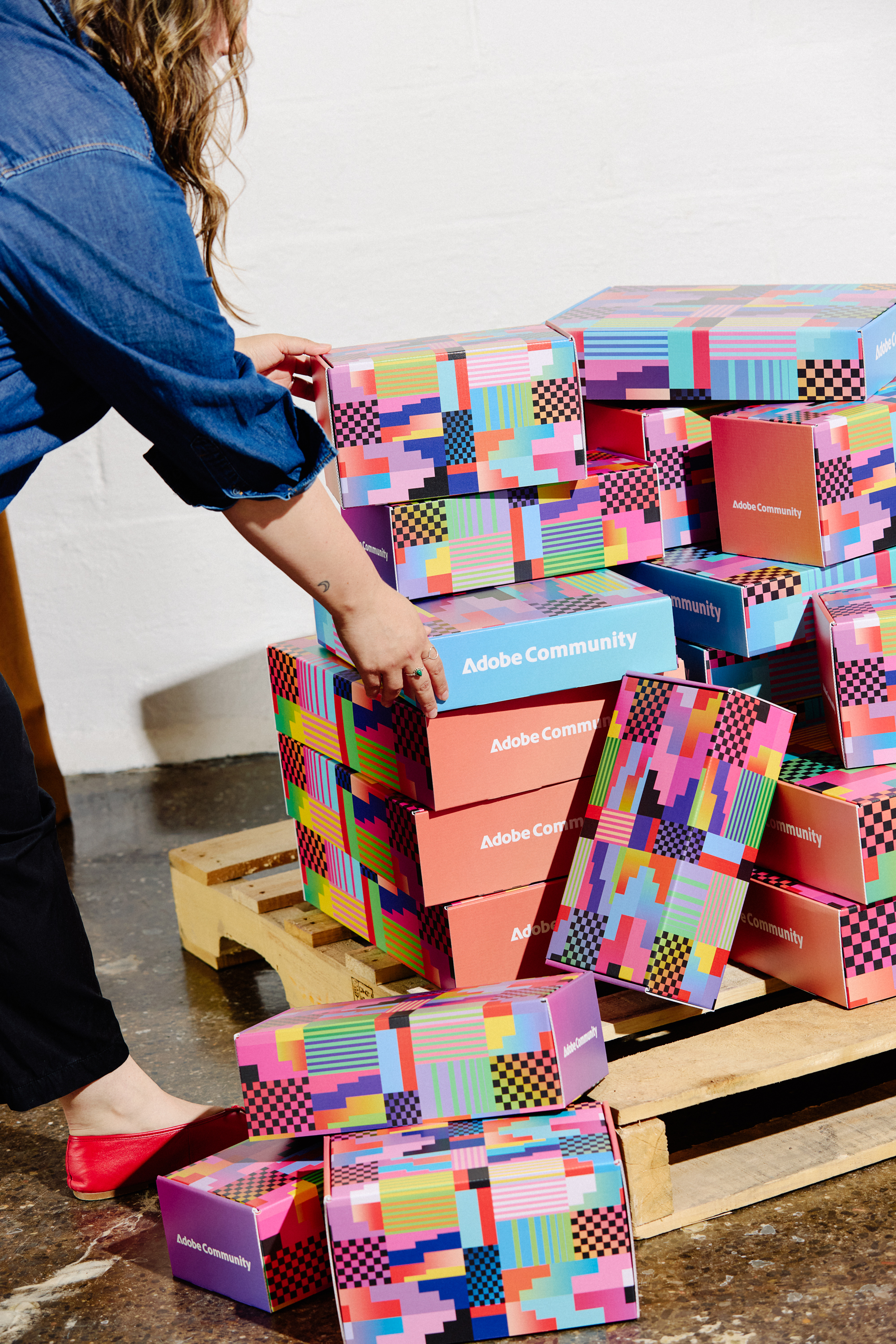
The boxes were sent directly to members of the community, where the physical experience became part of the campaign itself. Recipients shared photographs and Reels of their unboxings, with the packaging frequently becoming the focus of the content rather than simply a container for the products inside.
What began as a three-day packaging project became a small-scale brand experience, showing how even a temporary campaign touchpoint can create something people want to interact with, photograph and share.